What Is Tribal Lending? How It Works, Types and Benefits
Short-term and alternative lenders face a growing set of challenges as they expand their lending operations across state lines. Rising customer acquisition costs, state-specific regulations, licensing requirements, and APR caps can make it increasingly difficult to maintain healthy margins and scale profitably. Even lenders with strong portfolio performance and low default rates may find themselves constrained by regulatory complexity, legal costs, and unused capital that cannot be deployed efficiently.
These challenges have led credit unions, CFOs, and founders of alternative finance companies to explore tribal lending as a potential path to growth. By operating under the sovereignty of federally recognized Native American Tribes, tribal lenders may be able to develop and offer credit products across state lines within a distinct legal framework. However, tribal sovereignty alone does not solve the operational challenges of managing a growing loan portfolio. Effective loan management software is essential for managing origination, servicing, payments, collections, reporting, and other day-to-day lending operations at scale.
What is Tribal Lending?
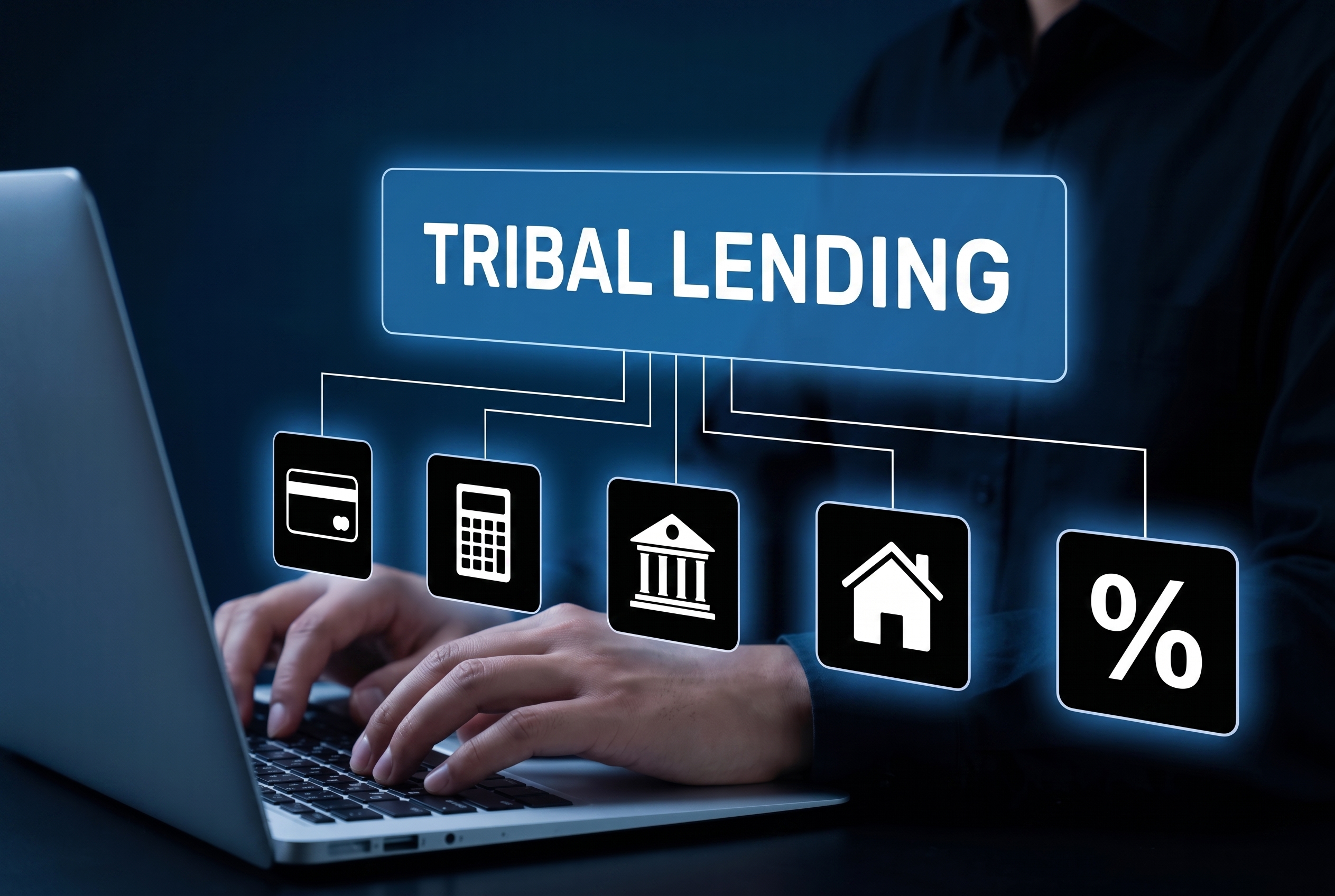
Tribal lending refers to loans offered by lending businesses that are owned and operated by federally recognized Native American tribes or tribal entities. These lenders operate under tribal law and exercise a degree of sovereign authority that is recognized under U.S. federal law. Federally recognized Native American Tribes possess inherent sovereign authority. Under the U.S. Constitution and decades of federal court rulings, this legal doctrine is known as Tribal Sovereign Immunity. When a Tribe establishes a financial services arm, that business operates as an arm of the Tribal government. That is Tribal lending. It is not a legal loophole. It is the exercise of sovereign law.
Federal Law Applies. State Rules Do Not.
Some operators believe Tribal lending means no rules. They are wrong, and that mistake ruins portfolios. A TLE (Tribal Lending Entity) must comply with core federal consumer protection statutes:
Truth in Lending Act (TILA)
Equal Credit Opportunity Act (ECOA)
Electronic Fund Transfer Act (EFTA)
Fair Debt Collection Practices Act (FDCPA)
Bank Secrecy Act (BSA) and Anti-Money Laundering (AML) regulations
The difference lies in state-level oversight. Tribal status exempts the business from individual state APR caps and licensing requirements. The Tribe sets the interest rates. The Tribe writes the lending laws. The Tribe enforces the standards.
The Code Must Hold the Line
Sovereignty gives you the right to operate, but it does not run the business. If your paperwork fails or your disclosures miss a calculation, state courts will test your immunity. They look for weakness.
A clean operation requires the tribal lending software that treats compliance as a hard rule, not an afterthought. Your loan management system must enforce Tribal rules on every contract. Loan origination must capture correct electronic signatures, stamp accurate TILA disclosures, and record every audit event.
When the tribal lending software is precise, the legal protection holds firm. When the software is soft, the business breaks.
How Tribal Lending Software Works: The Operational Lifecycle
Executing lending operations through tribal lending software requires precision at every point of contact. The legal structure gives you the right to lend, but your software determines whether you collect or lose money.
1. Digital Loan Origination and Verification
The borrower applies online. The system ingests applicant data instantly. Advanced loan origination software validates identity and captures accurate electronic signatures on TILA disclosures built specifically for your Tribal entity. Instant bank verification tools check real-time account balances and evaluate cash flow. You filter out fraud before it touches your balance sheet.
2. Automated Underwriting and External Decisioning
Manual underwriting costs too much and moves too slowly. The platform connects directly to your custom credit models and third-party data providers via APIs. The decision engine evaluates income stability, debt ratios, and credit history in seconds. Approved applicants receive funding quickly through direct ACH or debit card push.
3. Payment Processing and Loan Servicing
Once funded, the loan transitions to the core loan-servicing engine software. Repayment schedules generate automatically whether you issue installment loans, lines of credit, or short-term products. The platform handles payment processing directly, running scheduled ACH pulls and card transactions without third-party workarounds. Automated borrower communications send timely notices via SMS and email, keeping payments on track and default rates low.
4. Continuous Compliance Controls and Audit Logging
Tribal regulatory commissions require total transparency. A professional platform acts as a real-time compliance lockbox. Every transaction, contract update, borrower note, and interest calculation is tracked and stored. When regulators or auditors review your portfolio, you generate full audit reports straight from the dashboard. You maintain control, protect sovereign immunity, and keep your business clean.
Types of Tribal Lending Products
Tribal Lending Entities do not limit themselves to a single credit model. Operating under sovereign ordinance allows portfolio managers to structure loan terms, repayment frequencies, and eligibility criteria around true risk profiles.
1. Consumer Installment Loans
Installment loans are the steady workhorse of a consumer portfolio. They spread repayment across fixed schedules over several months or years, giving you predictable cash flow every week instead of praying a borrower settles up all at once on payday.
Portfolio Role: Produces reliable, long-term yield while flattening out the sharp default spikes that chew up short-term paper.
System Requirements: Your system needs to pull ACH payments like clockwork, handle dynamic principal-and-interest amortization without breaking, flag delinquencies early, and give your rep team clear tools to modify terms when a solid borrower runs into a brief rough patch.
2. Flexpay & Payday Loans (Short-Term Credit)
Small-dollar, short-duration products satisfy immediate liquidity needs for underbanked consumers. These products turn capital over quickly, demanding fast decisioning and seamless repayment tools.
Portfolio Role: High capital velocity with immediate returns on deployed funds.
System Requirements: Sub-second application processing, instant bank verification integrations, automated fee structures, and immediate recalculation of payment obligations if terms change.
3. Revolving Lines of Credit
Lines of credit give consumers open-ended access to funds up to an approved limit. Borrowers draw capital as needed, paying back principal and interest on active balances.
Portfolio Role: High retention rates without incurring continuous customer acquisition costs (CAC).
System Requirements: Real-time balance tracking, dynamic interest accrual engines, automated minimum payment calculations, and recurring statement generation.
4. Payroll Deduction Loans
Payroll-linked credit models allow borrowers to service loans directly through paycheck allocations.
Portfolio Role: Dramatically lowers default rates by capturing payments at the source before funds enter a consumer's general bank account.
System Requirements: Direct integration with payroll mechanisms, automated tracking of employer-side transfers, and real-time reconciliation inside the servicing engine.
Benefits of Tribal Lending Software
Sovereign status gives a lender authority. The technology platform determines profitability, operational scale, and legal stability. Attempting to run a Tribal lending operation on generic credit software creates dangerous compliance gaps and caps portfolio growth.
1. Automated Compliance and Risk Control
Tribal regulatory oversight requires strict adherence to sovereign ordinances alongside core federal laws. Modern software builds these boundaries directly into the codebase. The platform enforces correct (Truth in Lending Act) TILA disclosures, validates electronic signatures, tracks interest caps established by the Tribe, and generates immutable audit logs. When regulators inspect operations, full reporting is available on demand without manual assembly.
2. Multi-Product Portfolio Flexibility
A rigid platform limits market reach. High-volume operations require advanced tribal lending software that can manage diverse credit structures within a single system. The core engine handles installment loans, payday structures, lines of credit, and payroll deduction products simultaneously. Terms, amortization logic, and payment schedules adapt dynamically based on product rules, allowing lenders to pivot products as market conditions change.
3. End-to-End Operational Automation
Manual processing inflates customer acquisition costs and slows down time-to-fund. Automated loan origination and loan servicing capabilities move applicants from initial form submission to funding in minutes. The software manages automated underwriting rules, schedules direct ACH pulls, triggers debit push payments, and executes automated borrower communication workflows via SMS and email. Operations scale without a proportional increase in headcount.
4. API Connectivity and Real-Time Reporting
If modern portfolios are anything to go by, they rely heavily on third-party data services to combat fraud and verify income. A tribal lending software removes the hassle. It connects directly to credit bureaus, instant bank verification (IBV) providers, and payment processors via robust APIs. Real-time analytics dashboards track approval velocity, portfolio yield, default trends, and charge-off rates, providing decision-makers with complete visibility into capital performance.
Conclusion
To sum up everything that has been stated so far, tribal lending is more about aligning with regulations and less about shifting to another loan product. In fact, it is a lending model built on tribal sovereignty and supported by federal law. And such responsibility extends well beyond funding a loan. With the growth in volume and portfolio, manual processes cannot really cut to the chase. Not only do such discrepancies delay the response but also increase the compliance risk. Connected loan management software, on the other hand, lets lenders bring origination, collection, and reporting into a single environment. For Tribal lending entities, protecting sovereignty is the same as protecting the operations behind it.